SolarAttic | Knowledge Base
Complete SolarAttic FAQ & Knowledge Base
A complete SolarAttic FAQ library with 375 categorized questions and answers covering product selection, sizing, installation, plumbing, controls, operation, salt water pools, maintenance, troubleshooting, warranty, buying, returns, and legacy SolarAttic models.
- 375 total answers organized into practical knowledge-base categories
- Source-grounded PCS4 guidance based on SolarAttic manuals, brochures, warranty, archived materials, and current page content
- Expandable answers so homeowners, dealers, and installers can browse without being overwhelmed
- Clear authority note so current manuals, nameplates, warranty, and code always control technical decisions
Search the knowledge base
Find your SolarAttic answer quickly.
Search all 375 questions by topic, product feature, installation issue, troubleshooting symptom, warranty question, or technical term.
Enter a word or phrase to search all 375 questions.
Complete FAQ library
A user-friendly SolarAttic knowledge base, not a thin FAQ page.
This page is designed to help pool owners, buyers, dealers, contractors, and support teams quickly understand SolarAttic PCS4. The answers are grouped by real customer questions so visitors can move from basic product education to technical installation, warranty, troubleshooting, and legacy-model details.
For additional information about energy efficiency and heat transfer, visit the U.S. Department of Energy .
Answered Questions
Every FAQ question from the complete SolarAttic FAQ document is included.
Categories
Questions are grouped by product, sizing, installation, controls, warranty, troubleshooting, and more.
Current Product Focus
The page centers on the SolarAttic PCS4 panel-free solar pool heater.
Grounded Answers
Answer notes point back to manuals, brochures, current pages, archived materials, and warranty sources.
Start here
Choose the topic that matches your question.
Use these category links like a table of contents. Each category opens into individual click-to-expand questions and answers.
Complete SolarAttic FAQ Library
375 SolarAttic questions and answers, organized for easy browsing.
This expanded SolarAttic SolarAttic FAQ library adds the complete source-grounded SolarAttic PCS4 question bank covering product selection, sizing, installation, plumbing, controls, operation, chemistry, maintenance, troubleshooting, warranty, buying, returns, legacy models, and source conflicts.
Product overview and technology
Core questions about what the PCS4 is, what energy source it uses, and how heat moves from the attic into the pool. Q1-Q18
Q1What is the SolarAttic PCS4?
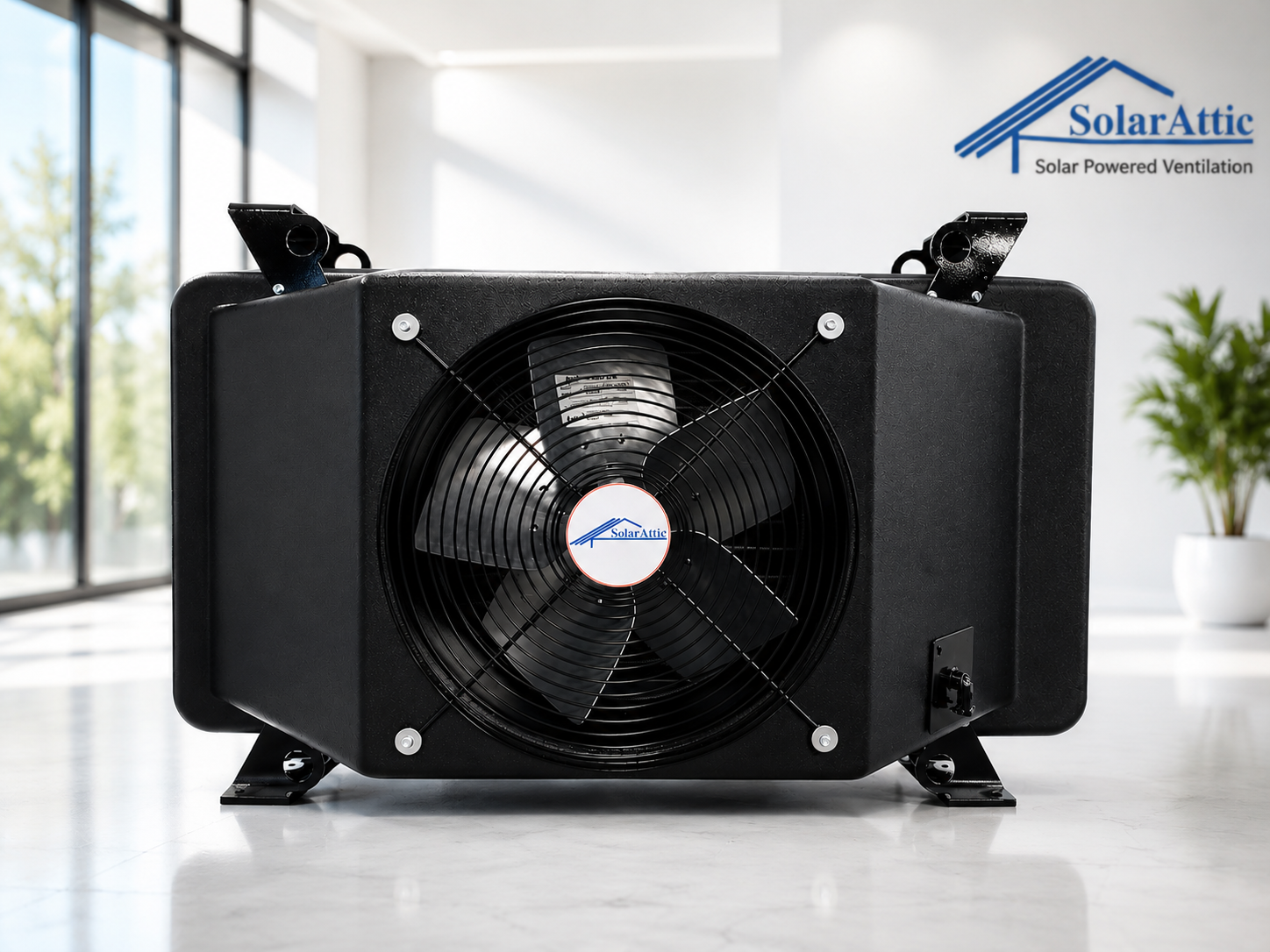
The PCS4 is a panel-free solar pool heater. It uses heat that sunlight has already built up in the roof and attic, moves attic air across a water coil, and transfers that heat into circulating pool water.
Sources: M p. 2; W-HOW; W-PROD
Q2What does PCS4 stand for?
The manual identifies PCS4 as Pool Convection System 4, the fourth-generation SolarAttic pool-heating unit.
Sources: M cover; M p. 6
Q3Is the PCS4 a solar heater even though it has no rooftop collectors?
Yes. The roof and attic act as the solar collection and heat-storage area. The PCS4 is the heat exchanger that transfers the collected solar heat into the pool.
Sources: M p. 2; W-HOW
Q4How does the roof contribute to heating the pool?
Sunlight warms the roof. Heat then reaches and accumulates in the attic; the PCS4 captures usable attic heat and transfers it into pool water.
Sources: M p. 2; W-HOW
Q5What heat-transfer process does the PCS4 use?
The manual describes heat reaching the attic by conduction and then moving from attic air into pool water by forced-air convection across the heat exchanger.
Sources: M p. 2
Q6Does pool water flow through the PCS4?
Yes. The pool pump routes filtered water through the PCS4 heat exchanger and back to the pool when the bypass valve is in the heating position.
Sources: M pp. 7-9
Q7Does attic air mix with pool water?
No. Attic air passes across the outside of the heat-transfer coil while pool water remains inside the coil. Heat crosses the coil wall; the air and water streams remain separate.
Sources: M p. 2; M p. 9 diagram
Q8Does the PCS4 burn gas or another fuel?
No. The PCS4 uses solar-derived attic heat and electricity for the blower and controls. The product literature states that it uses no fossil fuel for heat production.
Sources: B pp. 1, 3; W-BEN
Q9Does the PCS4 use refrigerant or CFC chemicals?
No. The brochure states that the PCS4 uses no CFC chemicals. It is not a compressor-based heat pump.
Sources: B p. 3; W-BEN
Q10Is the PCS4 a heat pump?
No. It does not use a refrigeration compressor cycle. It is an air-to-water heat exchanger that recovers solar heat from the attic.
Sources: M p. 2; B p. 3
Q11Is the PCS4 an attic fan?
Not in the ordinary code or ventilation sense. Its primary function is to recirculate attic air across the heat exchanger while pool water is flowing. Do not treat it as a substitute for required attic ventilation.
Sources: M pp. 2-3; A-TOP Q16
Q12Does the PCS4 exhaust attic air outdoors?
The normal attic installation recirculates air within the attic: warm air enters the finned side and cooler air leaves the blower side. Other installation styles may use ducts, but the sources do not describe the PCS4 as a general-purpose exhaust fan.
Sources: M pp. 2-3; I p. 1
Q13Can the PCS4 both heat and cool water?
Yes. Heat always moves from the warmer side to the cooler side. If the unit is run while the pool is warmer than the attic, it can cool the pool and warm the attic, which is why automatic temperature control is recommended.
Sources: M p. 9; M p. 16
Q14Why is simultaneous air flow and water flow essential?
The blower must move warm attic air across the coil at the same time the pool pump moves water through the coil. If either flow is missing, useful heat transfer cannot occur.
Sources: M p. 10; W-TRB
Q15What does the blower do?
The blower pulls warm attic air through the finned coil and discharges cooler air from the fan side after heat has moved into the pool water.
Sources: M pp. 2-3
Q16What is the nominal heating rating?
The published nominal rating is 60,000 BTU/hr at a 32 deg F temperature difference, illustrated as 72 deg F entering pool water and 104 deg F attic peak temperature.
Sources: M p. 28; B p. 3; I p. 1
Q17What is the published heat-transfer range?
The published range is 20,000 to 150,000 BTU/hr. Actual output varies with attic temperature, pool-water temperature, air flow, water flow, weather, and installation quality.
Sources: M p. 28; B p. 3; I p. 1
Q18Is the PCS4 the current SolarAttic model?
Yes. The current SolarAttic website identifies the PCS4 as its current or flagship panel-free solar pool-heating system.
Sources: W-PROD; W-HOW
Benefits and comparisons
Questions that compare SolarAttic with gas heaters, heat pumps, and roof-mounted solar pool collectors. Q19-Q33
Q19What are the main benefits of SolarAttic?
The principal benefits described in the sources are warmer pool water, a longer usable season, use of otherwise trapped attic heat, lower operating-cost potential, no traditional rooftop pool-heating panel array, and reduced attic heat while the unit is heating.
Sources: W-BEN; M p. 2
Q20How is SolarAttic different from roof-mounted solar pool panels?
SolarAttic uses the roof and attic as the collector instead of circulating pool water through a field of exposed rooftop panels. This can preserve roof appearance and reduce panel-related mounting and weather exposure.
Sources: W-WHY; W-PROD; A-SOLAR
Q21Does SolarAttic require roof penetrations for a panel array?
No traditional collector array is required. Plumbing and the selected installation method may still require building penetrations, flashing, or exterior routing, so the exact installation must be designed and sealed correctly.
Sources: W-HOME; I p. 1
Q22Does SolarAttic preserve curb appeal?
An attic installation can be completely hidden from exterior view. Roof, gable, and soffit options have different visual impacts, so curb-appeal results depend on the chosen installation.
Sources: I p. 1; W-BEN
Q23How does SolarAttic compare with a gas pool heater?
A gas heater can produce heat on demand but consumes fuel. SolarAttic depends on available attic solar heat and uses comparatively modest electrical power for the blower and controls, so it is weather-dependent rather than on-demand.
Sources: W-PROD; M pp. 2, 28
Q24How does SolarAttic compare with an electric heat pump?
A heat pump uses a compressor and refrigerant to move heat from outdoor air. The PCS4 uses already-heated attic air and has no compressor or refrigerant circuit, but its output depends on attic heat.
Sources: B p. 3; W-HOW; A-COM
Q25Can SolarAttic replace every conventional pool heater?
No. It is a solar, weather-dependent system. A backup heater may still be needed for year-round temperature guarantees, nighttime heating, cold cloudy periods, or an unusually long season.
Sources: M p. 25; A-TOP Q6
Q26Can SolarAttic be used with a backup heater?
Yes. The manual recommends locating a backup heater downstream from the PCS4 when extra heat is needed to extend the season beyond available solar capacity.
Sources: M p. 25
Q27Does SolarAttic help cool the attic?
Yes, while it is transferring heat into the pool. The blower moves attic air across the coil, and the discharge air can be 20 to 30 deg F cooler than the intake air.
Sources: M pp. 2-3; W-BEN
Q28Will attic cooling always reduce air-conditioning cost by a fixed percentage?
No fixed savings should be promised. The manual states that home-cooling effects can lower air-conditioning costs by 25 to 30 percent or more, but actual savings depend on climate, house construction, duct leakage, insulation, HVAC use, and operating hours.
Sources: M p. 2
Q29Is SolarAttic environmentally friendly?
The system uses solar-derived attic heat and does not burn fossil fuel or use CFC refrigerant to create heat. Electricity is still required for the blower, controls, and pool pump.
Sources: B p. 3; W-BEN
Q30Does SolarAttic eliminate all pool-heating electricity use?
No. The PCS4 blower, controller, valve operator, and pool pump use electricity. The benefit is that the heat source itself is solar attic heat rather than purchased fuel or compressor-generated heat.
Sources: M pp. 9, 28; W-BEN
Q31Does SolarAttic eliminate the need for a pool cover?
No. A cover is still valuable, especially in cool, windy, or shoulder-season conditions, because it reduces heat loss from the pool surface and helps retain the solar heat collected during the day.
Sources: M p. 25; A-COM
Q32Is SolarAttic protected from outdoor weather?
An attic installation protects the PCS4 from direct sun, wind, hail, and roof-service exposure. Roof, gable, and soffit installations require weather-appropriate design and may not provide the same protection.
Sources: I p. 1; W-PROD
Q33Is SolarAttic made in the United States?
Yes. Current SolarAttic materials identify the PCS4 as manufactured by Northern Geo LLC in Appleton, Minnesota.
Sources: B p. 4; W-PROD; W-CON
Pool suitability, sizing, and expected performance
Sizing limits, realistic temperature expectations, and the factors that determine whether a project is a good fit. Q34-Q55
Q34What pool size is the PCS4 designed to serve?
Published PCS4 guidance lists pools up to 1,000 square feet of surface area or 35,000 gallons.
Sources: M p. 28; B p. 3; W-PROD
Q35Can the PCS4 serve a pool larger than 35,000 gallons?
The installation-options document states up to 70,000 gallons with a specified FlowReversal module solution. Large or complex pools require manufacturer or qualified engineering review rather than a simple gallon-only assumption.
Sources: I p. 1; M p. 28
Q36Is pool surface area or water volume more important?
Both matter, but surface area strongly affects heat loss while volume affects the amount of water that must be warmed. The sources give both limits; project review should also consider depth, wind, cover use, and climate.
Sources: M p. 28; M p. 25
Q37How much can the PCS4 raise pool temperature?
The manual states that the system can raise pool temperature about 10 to 15 deg F above the unheated state under favorable conditions. This is a source claim, not a guaranteed result for every site.
Sources: M p. 2
Q38How much can it extend the swimming season?
The manual states that it can add about six weeks to each end of the season under favorable conditions. Actual extension depends on solar weather, heat loss, cover use, pool size, and desired water temperature.
Sources: M p. 2; M p. 25
Q39Can it keep a pool at a specific temperature every day?
Not by solar energy alone. Automatic control can stop heating at a chosen set point, but it cannot create attic heat during cold, cloudy, or nighttime conditions.
Sources: M pp. 2, 16; W-FAQ
Q40Can the PCS4 heat a pool 12 months a year?
Generally no. Archived SolarAttic guidance states that solar pool heaters do not maintain year-round heating in most U.S. locations; a conventional backup heater is needed when solar heat is insufficient.
Sources: A-TOP Q6; M p. 25
Q41Will the PCS4 work on cloudy days?
It may deliver reduced output if the attic is still warmer than the pool, but poor solar weather is a listed cause of insufficient heating. The controller should not call for heat when useful temperature difference is absent.
Sources: M pp. 2, 24
Q42Will it heat at night?
Normally no. At night the attic is usually not warmer than the pool. Automatic controls should prevent heating operation unless the temperature conditions are satisfied.
Sources: M pp. 2, 16, 25
Q43Does outdoor air temperature alone determine performance?
No. The useful variable is the temperature difference between attic air at the peak and pool water, together with air flow and water flow. Sun, roof construction, shade, ventilation, and pool heat loss all matter.
Sources: M pp. 2-3; M p. 28
Q44What temperature difference is used for the nominal rating?
The nominal 60,000 BTU/hr rating is published at a 32 deg F difference between attic peak temperature and entering pool water.
Sources: M p. 28; B p. 3
Q45When does the documented GL235 automation call for heat?
The PCS4 manual states that the GL235 routes water and turns on the unit when the attic is 4 deg F warmer than the pool and the pool needs heat.
Sources: M p. 2
Q46What is the best way to estimate output for my pool?
Use measured attic peak temperature, pool temperature, pool surface area and volume, cover use, pump flow, pipe run, and local weather. Ask SolarAttic or a qualified installer to review the complete project rather than relying on one rating.
Sources: W-CON; W-MAN; M p. 28
Q47Does a larger attic improve performance?
A larger, hotter attic generally provides more thermal resource. The manual requires attic floor area equal to or greater than pool surface area and at least 3 feet of peak height.
Sources: M p. 28; B p. 3
Q48Does a deeper pool take longer to heat?
Yes. Greater water volume requires more total heat for the same temperature rise. Deep pools also benefit from circulation strategies that distribute warmed water effectively.
Sources: M p. 28; A-COM
Q49Can a waterfall or water feature reduce performance?
Yes. The troubleshooting guide states that waterfalls can cause dramatic evaporative and convective cooling that masks or offsets PCS4 heat gain.
Sources: M p. 25
Q50Can a windy site reduce pool-heating results?
Yes. Wind accelerates evaporation and surface heat loss. A pool cover or wind shelter can materially improve retained heat.
Sources: M p. 25; A-COM
Q51Does an uncovered pool lose more heat?
Yes. The manual identifies an uncovered pool and cold nights as a common reason for a short season even when the PCS4 is heating correctly.
Sources: M p. 25
Q52Can the PCS4 overheat a pool?
It can make a pool warmer than some users prefer if the thermostat is set high and enough attic heat is available. In automatic mode, reduce the controller set point to the desired comfort level.
Sources: M p. 16; B p. 4 testimonials
Q53Can the PCS4 cool an overheated pool?
It can transfer heat from warmer pool water to cooler attic air when operated under reverse temperature conditions, but that is manual, site-specific use. Do not run it this way without understanding ventilation, condensation, and control implications.
Sources: M p. 9; A-COM
Q54Is performance guaranteed by the BTU range?
No. The range describes possible heat transfer under varying conditions, not a guarantee at every site or hour. Output is solar- and installation-dependent.
Sources: M p. 28; W-FAQ
Q55What information should I provide for a suitability review?
Provide pool location, surface area, gallons, depth, cover use, current heater, pump model, filter pressure, equipment layout, pipe length and lift, attic dimensions, attic peak temperatures, roof exposure, shade, ventilation, and radiant-barrier details.
Sources: W-CON; W-MAN; M pp. 2-3
Attic, roof, and site suitability
Attic heat, roof type, radiant barriers, access, ducting, ventilation, and house suitability. Q56-Q77
Q56What attic size is required?
The published requirement is at least 3 feet of height to the peak and attic floor area equal to or greater than the pool surface area.
Sources: M p. 28; B p. 3
Q57What minimum attic access opening is listed?
The manual lists a minimum opening of 17 x 23 inches and states that the PCS4 fits through standard trusses.
Sources: M p. 28
Q58Where in the attic should the PCS4 be located?
Place it as high as practical and within the middle third of the attic, while preserving access and keeping both intake and discharge unobstructed.
Sources: M pp. 2-3
Q59Why should the unit be high in the attic?
Heat rises, so the warmest usable air is normally near the peak. Locating the unit too low can materially reduce heat-transfer performance.
Sources: M pp. 2-3; M p. 25
Q60Why should the unit be in the middle third of the attic?
The middle third reduces the risk that walls or short air paths will obstruct the intake or cause cooler discharge air to recirculate immediately back into the coil.
Sources: M p. 3
Q61What is airflow short-circuiting?
It occurs when cooled discharge air returns directly to the finned intake instead of mixing with the larger body of warm attic air. This reduces inlet temperature and heating output.
Sources: M p. 3; M p. 25
Q62Which side of the unit should face the longest part of the attic?
If the PCS4 is off-center, the finned coil intake side should face the longest open portion of the attic so it can draw warmer air without obstruction.
Sources: M p. 3
Q63How much clearance is needed around the intake and discharge?
The sources do not give one universal clearance dimension. They require unobstructed intake and discharge and enough separation to prevent short-circuiting; the installer should confirm the layout in the actual attic.
Sources: M pp. 2-3
Q64Can the PCS4 sit on the attic floor?
It may sit on a properly supported platform, but the manual recommends locating it as high as practical. A one-inch foam layer and a secondary drain pan are recommended for vibration and leak protection.
Sources: M p. 3
Q65Can the PCS4 be suspended?
Yes. The manual describes suspension on a platform using cargo straps or small chains and also provides a mounting bracket approach. The building structure must be able to carry the unit and water weight.
Sources: M pp. 3, 6
Q66Can the PCS4 be installed above living space?
The brochure illustration says it is not intended to be installed above living spaces. Select a location and secondary containment strategy that comply with code and minimize water-damage risk.
Sources: B p. 2; M pp. 3, 5
Q67Does the PCS4 need a secondary drain pan?
The manual recommends a Smitty pan as an added layer of protection, and some codes require one under attic equipment. Current registration guidance also recommends a secondary pan where required or desired.
Sources: M pp. 3, 5; W-REG
Q68Does a radiant barrier affect suitability?
Yes. Current SolarAttic guidance says radiant-barrier roof systems may reduce attic heat collection. Measure actual attic peak temperatures and obtain project review before purchasing.
Sources: W-FAQ; W-MAN; W-CON
Q69Does roof color affect performance?
Roof color can affect solar heat absorption, but current PCS4 documents do not provide a guaranteed color factor. Darker, sunny roofs commonly build more heat; measured attic temperature is more reliable than color alone.
Sources: A-COM; W-CON
Q70Does roof shade affect performance?
Yes. Shade reduces solar heat entering the roof and can lower attic temperature. Site review should consider the hours and seasons when the roof is shaded.
Sources: A-COM; W-CON
Q71Do ridge vents or powered attic ventilators affect performance?
They can. Heavy ventilation may remove the heat the PCS4 needs. Do not disable required ventilation without professional review; instead, measure attic conditions and discuss suitability with SolarAttic or a building professional.
Sources: A-COM; W-CON
Q72Can the PCS4 work in a very well-ventilated attic?
Only if useful peak attic temperatures still develop. An attic that remains close to outdoor temperature may not provide adequate heat, regardless of how hot it feels briefly.
Sources: A-COM; W-FAQ
Q73Is insulation level in the ceiling the main performance factor?
No. The available heat near the roof deck and peak is more important for the PCS4. Insulation and air sealing still affect the home and should not be altered solely for the heater without building-science review.
Sources: A-COM; M pp. 2-3
Q74Can the roof deck be insulated or lined?
A radiant barrier or roof-deck insulation can reduce heat available to the attic. Because construction varies, measure attic peak temperatures and obtain a project-specific suitability review.
Sources: W-FAQ; W-MAN
Q75How can I test whether the attic gets hot enough?
Record peak attic temperature on representative sunny days, ideally near the roof apex and away from the PCS4 discharge path. Compare it with pool temperature and share the data with SolarAttic or the installer.
Sources: M pp. 2-3; A-COM
Q76Can a low-slope or short attic be used?
The standard attic guidance calls for 3 feet of peak height. If that is unavailable, roof, gable, or soffit options may be considered, but they require project-specific design.
Sources: M p. 28; I p. 1
Q77Does attic dust matter?
Dust can accumulate on the coil fins and reduce airflow or heat transfer. The manual recommends annual inspection and vacuuming as needed.
Sources: M p. 17
Installation options and unit placement
Attic, roof, gable, and soffit installation paths, plus service access and placement considerations. Q78-Q101
Q78What installation options are published for the PCS4?
The current installation-options sheet lists attic, roof, gable, and soffit installations.
Sources: I p. 1; W-HOME
Q79What is an attic installation?
The unit is placed inside the attic, completely hidden from exterior view and accessible from within the attic.
Sources: I p. 1
Q80What is a roof installation?
The unit is mounted on the roof and pulls heated air from the attic, with service access from the roof. The one-page options sheet does not provide full structural or weatherproofing details.
Sources: I p. 1
Q81What is a gable installation?
The unit is mounted at a gable and draws heated air from the attic. Suitability depends on wall structure, air path, weather protection, and service access.
Sources: I p. 1
Q82What is a soffit installation?
The unit is located at ground level and draws attic air through a duct routed through the soffit. Proper duct sizing, weather protection, condensate control, and service access require project-specific design.
Sources: I p. 1
Q83Which installation option is best?
There is no universal best option. The choice depends on attic access, structural support, living-space risk, roof design, service access, exterior appearance, piping route, ducting, local code, and installer judgment.
Sources: I p. 1; W-CON
Q84Does the PCS4 manual fully document all four installation styles?
No. The uploaded manual gives detailed guidance primarily for an attic installation. Roof, gable, and soffit projects need current manufacturer-approved details beyond the one-page options summary.
Sources: M pp. 2-15; I p. 1
Q85Who should install the PCS4?
The system involves attic work, plumbing, electricity, controls, and structural support. Qualified pool, plumbing, electrical, HVAC, or solar professionals should handle the portions for which licensing or expertise is required.
Sources: M pp. 4-6; W-HOME
Q86Can a homeowner install it?
A capable homeowner may perform some work where allowed, but the manufacturer recommends professional help for many installations. Electrical and code-regulated plumbing work should be done by qualified professionals.
Sources: W-BUY; M pp. 4-6
Q87What are the three basic installation steps?
Locate and support the PCS4, connect it to the pool plumbing, and connect it to power or automation equipment.
Sources: M p. 6
Q88Should the plumbing unions be attached before the unit is placed?
The manual suggests installing the mating female PVC union fittings on the two-inch male connections before locating the unit in the attic.
Sources: M p. 6
Q89What sealant does the manual specify at the threaded connections?
The manual recommends silicone sealant, a 24-hour cure, and specifically says not to use Teflon tape at the copper-thread-to-PVC-female connection. Follow the current unit instructions and fitting manufacturer if they differ.
Sources: M p. 6
Q90How should the unit be supported?
Use the supplied bracket or a properly engineered platform or suspension system attached to suitable framing. Support must account for the unit, contained water, vibration, and service loads.
Sources: M pp. 3, 6
Q91How heavy is the PCS4?
The sources conflict: the brochure lists 136 lb, the specification page lists about 110 lb, and a manual warning lists 142 lb uncrated and 163 lb filled. Use the shipping documents and the specific unit nameplate; plan for team lifting.
Sources: M pp. 6, 28; B p. 3
Q92Can one person lift or install the unit?
No. The manual states that two or more people should handle it and warns against lifting it alone because of its weight and bulk.
Sources: M p. 6
Q93Should foam be placed under the unit?
If the unit sits on a platform, the manual recommends about one inch of foam beneath it to reduce vibration transmission.
Sources: M p. 3; M p. 25
Q94Must the unit be level?
Install it in the orientation shown and required by the manual so the base pan, float, drainage, and airflow work correctly. A unit installed upside down can create a false float condition.
Sources: M pp. 11, 24
Q95Can the unit be mounted rigidly to the building?
Rigid mounting can transmit vibration. The troubleshooting guide lists rigid attachment as a cause of excessive vibration; use the recommended bracket, isolation, and supported piping.
Sources: M p. 25
Q96How should service access be planned?
Leave safe access to the front and side service panels, unions, wiring compartment, float panel, blower assembly, and surrounding plumbing. Do not trap the unit behind permanent construction.
Sources: M pp. 10-14, 20
Q97Should the unit be near the equipment pad?
A shorter, accessible plumbing path can reduce friction, cost, and service difficulty. The manual recommends considering equipment-pad location and attic access together.
Sources: M p. 7
Q98Can the equipment pad be relocated closer to the attic route?
Yes, the manual notes that pool support piping can be extended so the equipment is in a more convenient position, but pump capacity and total friction must be rechecked.
Sources: M p. 7
Q99Can the PCS4 be installed in a garage attic?
Potentially, if attic temperature, air path, area, support, access, and plumbing meet requirements. The project must still avoid discharge short-circuiting and protect living spaces.
Sources: M pp. 2-3; A-COM
Q100Should installation work be done during the hottest part of the day?
No. The manual warns of attic heat exposure and recommends completing attic work in the morning when heat buildup is lower, with adequate ventilation and heat-safety precautions.
Sources: M p. 5
Q101Do local building codes apply?
Yes. Structural, plumbing, electrical, roof, fire, access, drain-pan, and pool-equipment rules may apply. The manual requires compliance with local, state, and national codes.
Sources: M pp. 4-6
Plumbing, pump, flow, and equipment layout
Pump flow, bypass plumbing, valves, unions, filter pressure, equipment order, and backup heater layout. Q102-Q135
Q102Where is the PCS4 connected in the pool plumbing?
It is connected on the filtered, pressure side of the circulation system. The basic diagram shows pump, filter, bypass routing to the PCS4, then return plumbing to the pool.
Sources: M pp. 7-9
Q103Where should the chemical dispenser be installed?
All chemical dispensers must be downstream from the PCS4 so concentrated chemicals are not fed directly into the heat exchanger.
Sources: M pp. 5, 9, 28; W-SALT
Q104Where should a salt cell be installed?
Current SolarAttic salt-water(salt water) guidance says the salt cell or chemical-feeding point should generally be downstream from the PCS4.
Sources: W-SALT
Q105What size are the PCS4 plumbing connections?
The manual lists two-inch male pipe-thread connections.
Sources: M p. 28
Q106What pipe size is recommended?
Two-inch PVC is recommended to reduce friction, especially with pumps larger than one horsepower, long pipe runs, or high flow.
Sources: M p. 3; A-TOP Q25
Q107Can 1-1/2-inch pool plumbing be connected to the PCS4?
Yes, reducers can connect smaller existing plumbing to two-inch PCS4 and bypass components. The installer must verify that the resulting flow and pressure are adequate.
Sources: M p. 7; A-TOP Q25
Q108What water-flow range is published?
The published operating range is 15 to 65 GPM.
Sources: M p. 28; I p. 1
Q109What is the optimal water flow?
The manual lists 40 to 50 GPM, while the current installation-options sheet lists 40 to 45 GPM. Use the current unit documentation and verify actual system flow.
Sources: M p. 28; I p. 1
Q110What pressure drop does the PCS4 add?
The manual lists a typical pressure drop of 4 to 6 PSI.
Sources: M p. 28
Q111Will the existing pool pump usually work?
The manual states that the existing pump is sufficient in about 99 percent of installations, but long runs, high lift, restrictions, or marginal pump sizing can require detailed review.
Sources: M p. 6
Q112What general pump rule does the manual give?
As a general rule, the manual says a one-horsepower pump can handle about a 250-foot round trip and 25 to 30 feet of vertical lift. The actual pump curve and system head control.
Sources: M p. 7
Q113How should pump capacity be verified?
Use the pump manufacturer curve with estimated total dynamic head, including static lift during startup, pipe friction, fittings, filter, valves, and PCS4 pressure drop. A pool professional should confirm the result.
Sources: M p. 7
Q114Does vertical lift permanently add the full static head in a closed return loop?
The manual provides a practical lift rule, but hydraulic behavior depends on the filled loop, startup, siphon, air, and return elevation. Use a qualified hydraulic design rather than a single simplified calculation.
Sources: M p. 7
Q115What happens if the pump is too small?
Water flow can fall, filtration can worsen, the pool may become cloudy, and the pump may overheat or trip its thermal protection. Heating output will also decline.
Sources: M pp. 7, 25
Q116Should a pump be replaced simply because it feels hot?
No. The manual notes that pool-pump motors normally feel too hot to touch. Use flow, pressure, pump-curve, and thermal-trip evidence rather than touch alone.
Sources: M p. 7
Q117What is the purpose of the bypass valve?
It routes water either through the PCS4 for heating or around it for normal filtration, cleaning, or service.
Sources: M pp. 9, 16
Q118Can the bypass valve be manual?
Yes. Manual systems use a manually positioned bypass valve. It can later be fitted with compatible automation if the valve and layout support it.
Sources: M p. 16; I p. 1; A-TOP Q10
Q119What is the purpose of the valve operator?
The valve operator rotates the bypass valve in response to the solar controller so water is routed through the PCS4 only when heating conditions call for it.
Sources: M pp. 12-16
Q120Is a check valve shown in the basic plumbing diagram?
Yes. The diagram shows a check valve on the PCS4 outlet leg before the return connection. The installer must select and orient valves for the actual layout.
Sources: M p. 9 diagram
Q121Which PCS4 connection is the inlet?
The manual diagram shows water entering the upper PCS4 connection and leaving the lower connection. Archived PCS3 guidance also identifies the top as the preferred inlet for performance and drainage.
Sources: M p. 9 diagram; A-TOP Q8
Q122Can the inlet and outlet be reversed?
Archived guidance says the system may still transfer heat if reversed, but top-in and bottom-out is the intended arrangement. Follow the PCS4 labeling and current manual rather than treating reversal as standard practice.
Sources: M p. 9 diagram; A-TOP Q8
Q123Should pipes be supported?
Yes. All attic and exterior pipes must be supported so their weight does not stress glued joints, unions, or the PCS4 connections. Do not allow pipe to sag.
Sources: M p. 3
Q124Why are unsupported pipes dangerous?
Mechanical load and movement can crack glued joints or union connections, creating leaks and water damage.
Sources: M p. 3
Q125Can flexible PVC be used in the attic?
The manual permits a continuous length of flex PVC to reduce cemented joints and solvent fumes in the attic. Confirm temperature rating, pressure rating, manufacturer instructions, and local code.
Sources: M pp. 3, 5; A-TOP Q24
Q126Why is flex PVC suggested for attic runs?
It can eliminate most solvent-welded joints in a hot, confined attic and reduce exposure to PVC cement fumes.
Sources: M pp. 3, 5; A-TOP Q24
Q127Can CPVC be used?
Yes. The manual says CPVC may be used where excessive attic heat is a concern.
Sources: M p. 3
Q128Can drain-waste-vent fittings be used?
No. The manual requires Schedule 40 PVC or CPVC pressure fittings and warns that shallow-socket drain-waste fittings can separate under pool-system conditions.
Sources: M p. 4
Q129Should exterior PVC be painted?
Yes. The manual says exposed exterior PVC should be painted to reduce sunlight deterioration. Use a coating compatible with PVC.
Sources: M p. 3
Q130Should underground pipes be insulated?
The manual says underground horizontal pipes should be wrapped or insulated so wet ground does not directly contact them and draw away heat. It says vertical above-ground pipes normally do not require insulation.
Sources: M p. 3
Q131Can copper or brass plumbing be reused?
Yes, if it is sound. The manual describes adapting metal pipe to PVC with an appropriate coupling sized for the different outside diameters.
Sources: M p. 7
Q132Should existing winterizing gate valves be removed?
No. In freezing climates, main drain, return, and skimmer isolation valves are needed for winterization. They may be temporarily moved during replumbing but should not be eliminated.
Sources: M p. 7
Q133What filter pressure is considered typical?
The troubleshooting guide says total pressure should generally be below about 22 to 27 psi in a typical installation with a clean filter. Actual normal pressure depends on the specific system.
Sources: M p. 25
Q134Can a dirty filter reduce heating?
Yes. A dirty filter restricts water flow, raises pressure, reduces circulation, and can reduce heat transfer through the PCS4.
Sources: M pp. 24-25; W-TRB
Q135Should installation be dry-fitted before cementing?
Yes. The manual instructs installers to assemble and verify fit before permanent solvent welding and not to accept leaking joints.
Sources: M p. 4
Electrical power, controllers, sensors, and automation
Power, controls, sensors, thermostat logic, valve operators, automation, and electrical source conflicts. Q136-Q171
Q136What voltage does the PCS4 use?
The unit is a nominal 115/120 VAC appliance. The manual data label shows 120 V; other literature says 115 VAC. The specific unit nameplate and current wiring instructions control.
Sources: M pp. 10, 27-28; B p. 3
Q137How much current does the PCS4 draw?
The sources conflict: the brochure lists 3.6 A full load, the manual specification page lists 5.2 A, and the data label shows 3.6 FLA with 4.5 A minimum ampacity. Use the unit nameplate and a qualified electrician.
Sources: M pp. 27-28; B p. 3
Q138What is the maximum PCS4 wattage?
Published documents conflict between 405 W and 625 W. For load calculations, use the specific unit nameplate, current manufacturer documentation, and applicable electrical code.
Sources: M p. 28; B p. 3
Q139What circuit size is required?
Do not size the circuit from a marketing brochure. A qualified electrician must use the unit nameplate, controller load, conductor length, overcurrent rules, local code, and any other connected equipment.
Sources: M pp. 4, 27
Q140Does the PCS4 ship with a power cord?
The manual contains differing descriptions, but its internal-wiring page states that ETL certification requires shipment without a power cord for the attic application. Inspect the actual unit and follow current instructions.
Sources: M pp. 9-11
Q141Can it plug into a standard outlet?
Only if the actual unit is configured and approved for that connection and the outlet is code-compliant. It must not be left continuously energized without coordinated water flow and temperature control.
Sources: M p. 9; A-TOP Q15
Q142Can the PCS4 run from an ordinary wall switch?
A manual switch can control a manual installation, but water must be routed through the PCS4 at the same time. Automatic solar control is recommended to prevent accidental pool cooling.
Sources: M pp. 9, 16
Q143Why is automatic control recommended?
Automation compares attic and pool temperatures, routes water through the PCS4, and energizes the blower only when useful heat is available and the pool needs heat.
Sources: M pp. 2, 9, 16
Q144What controller is documented in the PCS4 manual?
The manual uses the Goldline/Hayward GL235 as its example and states that it was the controller supported by SolarAttic technical staff at the time of that manual.
Sources: M p. 10
Q145Can other solar controllers be used?
Potentially yes. Current purchase guidance offers a PCS4 without controls for compatible third-party automation. Compatibility must include temperature inputs, valve actuation, and a properly rated relay for the PCS4.
Sources: W-BUY; A-TOP Q9
Q146Can Pentair, Hayward, or Jandy automation be used?
Current SolarAttic purchase guidance identifies those brands or similar automation as possible uses for the no-controls package. A professional must verify voltage, relay, sensor, and valve compatibility.
Sources: W-BUY
Q147What inputs does an automatic system need?
It needs pool-water temperature, attic peak temperature, a pool-heat set point, valve control, and switched PCS4 power. Pump synchronization may require an external relay.
Sources: M pp. 2, 10, 14-15
Q148Where should the attic temperature sensor be installed?
At the attic apex or peak, above the PCS4 and outside the cooler discharge-air stream.
Sources: M pp. 3, 10-11
Q149Why must the attic sensor be at the peak?
The PCS4 performance criteria assume peak attic temperature. Lower placement can sense cooler air and dramatically reduce operating time and heat extraction.
Sources: M p. 3; M p. 25
Q150Why must the attic sensor be outside the discharge stream?
PCS4 discharge air can be 20 to 30 deg F cooler than intake air. If that air cools the sensor, the controller may cycle erratically or shut off too soon.
Sources: M p. 3; M p. 10
Q151Where should the pool-water sensor be installed?
The basic diagram places it on the filtered-water piping near the equipment system. It should sense representative pool water and be protected from direct sun, rain, and wind.
Sources: M pp. 3, 9
Q152Why should the pool sensor be sheltered?
Rain, wind, or sun can create false readings that make the system turn on at night, too early, or too late. Insulation and weather protection may be needed.
Sources: M p. 3; M p. 25
Q153What sensor type is used in the documented system?
The manual describes standard 10K thermistor temperature sensors for the attic and pool circuits.
Sources: M pp. 11-12; B p. 3
Q154What is the optional internal float?
It is a normally closed leak-detection switch in the PCS4 base pan. Rising water opens the attic-sensor circuit so a controller in AUTO interprets a cold or failed solar sensor and shuts the system down.
Sources: M p. 12
Q155How is the float wired?
The two white float wires are wired in series with the 10K attic sensor circuit, not in parallel.
Sources: M p. 12
Q156Does the float work in manual or test mode?
No. The manual states that it protects the system only when the GL235 is in AUTO. Manual ON or TEST bypasses the temperature-sensor logic and the float protection.
Sources: M pp. 12, 16
Q157What happens when the float opens?
In the documented GL235 system, the PCS4 shuts down in AUTO and the red Check Sensor light flashes.
Sources: M p. 12; M p. 24
Q158Can freeze-recirculation logic interfere with the float?
Yes. The manual warns that GL235 recirculating freeze protection can disable the optional leak float and prevent the pump or PCS4 from turning off.
Sources: M p. 3
Q159Can the controller turn on the pool pump?
The manual says the GL235 can synchronize the pump through an external relay. This ensures water flow and blower operation occur together.
Sources: M pp. 2, 10
Q160Why might a minimum filtration timer still be needed?
If the pump is slaved to solar demand, cloudy days may not provide enough filtration runtime. The manual suggests a timer to enforce minimum filtration independent of solar calls.
Sources: M p. 10; M p. 25
Q161Can the GL235 be powered by 115 or 230 V?
Archived GL235 guidance says the controller can be configured for either supply voltage, but the PCS4 itself must receive its required 115/120 V. Follow the controller manual and a qualified electrician.
Sources: A-TOP Q18; M pp. 10, 15
Q162What happens if 230 V is connected to 115 V terminals?
The manual warns that applying 230 V to the GL235 terminals intended for 115 V will destroy the controller and void its warranty.
Sources: M pp. 10, 23
Q163How is the PCS4 switched by the GL235?
The manual shows the 115 V hot conductor passing through GL235 relay terminals 5 and 6, with neutral and ground routed directly to the PCS4 outlet or connection. Only a qualified electrician should implement the diagram.
Sources: M pp. 14-15; A-TOP Q20
Q164Can a 220 V pool timer be used with the GL235?
The manual includes a specific 220 V timer wiring option that still supplies the PCS4 with the correct 115/120 V. Use the diagram and qualified electrical service; do not improvise.
Sources: M p. 15
Q165What controller mode should be used for normal automatic operation?
Use AUTO. It enables temperature comparison, valve control, and the optional float circuit.
Sources: M p. 16
Q166What is the GL235 TEST or ON mode for?
It forces manual operation for testing or special use. It does not rely on pool and attic temperature sensors or the optional float, so it should not be the normal unattended mode.
Sources: M p. 16
Q167What does OFF mode do?
It turns off the SolarAttic heating call. For service or unattended shutdown, additional valve and pump isolation steps may also be required.
Sources: M pp. 16-17, 20
Q168Can a simple attic-temperature switch be used?
Yes, for semi-automatic operation. It can energize the PCS4 above a chosen attic temperature, but it does not compare attic temperature with pool temperature and does not automate the bypass valve by itself.
Sources: M pp. 9, 16; A-TOP Q22
Q169Can a manual system be automated later?
Yes. Current and archival SolarAttic guidance state that a manual system can be upgraded later if compatible controls, sensors, valve operator, and wiring are added.
Sources: I p. 1; A-TOP Q10
Q170What starting capacitor does the PCS4 use?
The manual is internally inconsistent: one page shows 5.0 microfarad, 440 VAC, while troubleshooting text mentions 20 microfarad, 120 VAC. Do not order from the text alone; match the installed component and obtain current manufacturer confirmation.
Sources: M pp. 11, 22
Q171Who should troubleshoot electrical components?
A qualified electrician or trained service technician. The manual warns that 115/120 VAC can cause serious injury or death and that some diagnostic tests expose live voltage.
Sources: M pp. 4, 20-22
Daily operation and temperature control
Automatic operation, manual operation, set points, runtime, pump coordination, and daily owner use. Q172-Q189
Q172How is a manual PCS4 system turned on?
Turn on PCS4 power and position the bypass valve so water flows through the unit. Both actions must occur together.
Sources: M p. 16
Q173How is a manual PCS4 system turned off?
Turn off PCS4 power and return the bypass valve to bypass. This allows normal filtration or cleaning without sending water through the heater.
Sources: M p. 16
Q174Why should water be bypassed when heating is not wanted?
The bypass reduces unnecessary flow through the attic loop and prevents accidental reverse heat transfer during filtration or cleaning.
Sources: M p. 16
Q175How does semi-automatic operation work?
An attic-temperature switch or timer limits PCS4 power to warmer daytime periods, while the pump and bypass valve must also be coordinated. It is less precise than full differential control.
Sources: M pp. 9, 16
Q176What pump-timer window is suggested for semi-automatic use?
Current SolarAttic purchase and installation guidance recommends approximately 11 AM to 7 PM. Local solar conditions and filtration needs may justify a different schedule.
Sources: I p. 1; W-BUY
Q177How does full automatic operation work?
The controller compares attic and pool temperatures, checks the desired pool set point, moves the bypass valve, and switches PCS4 power when useful heat is available.
Sources: M pp. 2, 16
Q178What initial thermostat setting does the manual recommend?
Set the GL235 thermostat fully clockwise to maximum in AUTO so the system captures maximum available heat, then reduce the setting if the pool becomes warmer than desired.
Sources: M p. 16
Q179Why might the controller dial differ from a pool thermometer?
Sensor location, depth, calibration, plumbing temperature, and pool stratification can make the controller dial disagree with a thermometer. Use actual swimming comfort and a reliable pool measurement to fine-tune the set point.
Sources: M p. 16
Q180Should the pool pump be on whenever the PCS4 is on?
Yes. The manual repeatedly states that water flow and air flow must be synchronized for heat transfer and equipment protection.
Sources: M pp. 2, 10, 16
Q181Can the PCS4 operate when the pump is off?
The blower may run if wired incorrectly or manually forced, but no useful pool heating occurs. Correct the control logic so the pump and PCS4 operate together.
Sources: M pp. 2, 10
Q182Can water flow through the PCS4 while the blower is off?
It can if valves are positioned that way, but useful heat transfer is reduced or absent. Normal automation should coordinate valve position and blower power.
Sources: M p. 10
Q183Why does the automatic system run only part of the day?
It runs only when the attic is sufficiently warmer than the pool and the pool is below the set point. Cloud cover, time of day, season, and pool temperature change the runtime.
Sources: M p. 2; W-TRB
Q184Can the PCS4 be left in AUTO all season?
Yes, during the operating season if plumbing, sensors, chemistry, pump scheduling, and freeze conditions are properly managed. Use OFF for service, extended absence, winterization, or known problems.
Sources: M pp. 16-20
Q185Should TEST mode be used for normal heating?
No. TEST or manual ON is mainly for testing because it bypasses automatic sensor and float protection.
Sources: M p. 16
Q186Can the PCS4 be used only for attic cooling?
The sources support attic-heat reduction while pool heating, but they do not establish PCS4 as a substitute for a designed attic-ventilation system. Manual operation without useful pool heat can also cool the pool.
Sources: M pp. 2, 9; A-TOP Q16
Q187What should I do if the pool becomes too warm?
Lower the automatic thermostat setting or turn the controller OFF. Do not alter safety sensors or restrict flow as a temperature-control method.
Sources: M p. 16
Q188What should I do before leaving the pool unattended?
Turn the PCS4 controller OFF for an extended absence, arrange reliable water-chemistry maintenance, and consider additional valve-operator isolation as described in the manual.
Sources: M pp. 19-20
Q189What operating mode provides maximum heat extraction?
A correctly installed automatic system in AUTO, with the thermostat initially set high and pump operation synchronized, provides the best opportunity to capture available attic heat.
Sources: M pp. 2, 16
Water chemistry, salt-chlorine pools, and corrosion protection
Water-balance requirements, salt systems, chemical feeders, acidic water, and heat-exchanger life. Q190-Q205
Q190Can the PCS4 be used with a salt-water (salt water) pool?
Yes, if salt is used as the source of chlorine and water chemistry is correctly maintained. Salt-chlorine pools are not the same as ocean- or sea-water pools.
Sources: M p. 28; W-SALT
Q191Does a salt-chlorine pool automatically void the warranty?
No. The PCS4 warranty states that use of salt as a source of chlorine does not void coverage, provided the other chemistry and installation requirements are met.
Sources: M p. 28; W-SALT
Q192Can the PCS4 be used with ocean or sea water?
No. The warranty states that use in ocean or sea-water pools voids coverage.
Sources: M p. 28; W-SALT
Q193What pH range is required for warranty protection?
The warranty identifies 7.2 to 7.6. pH outside that range voids the PCS warranty according to the manual.
Sources: M p. 28; W-SALT
Q194Why is low pH dangerous to the PCS4?
Acidic water can corrode the heat-transfer coil and other metal pool equipment, causing leaks and shortened life.
Sources: M pp. 5, 19-20, 28
Q195Is pH the only chemistry value that matters?
No. pH is the warranty value explicitly stated, but chlorine, total alkalinity, calcium hardness, stabilizer, salt level, and overall balance should also be maintained within the applicable pool-equipment guidance.
Sources: W-SALT; M p. 5
Q196Where should a chlorinator or chemical feeder be placed?
Downstream from the PCS4, with appropriate backflow protection as required by the equipment manufacturer and pool design.
Sources: M pp. 5, 9, 28; W-SALT
Q197Can chemicals be dispensed directly into the PCS4?
No. The warranty states that dispensing pool chemicals directly into the heater voids coverage and can damage the coil.
Sources: M p. 28
Q198Should the PCS4 be used while opening a dirty or algae-filled pool?
No. Complete the initial cleanup and restore balanced water before circulating it through the PCS4. The spring-startup procedure says to balance chemistry before pumping water through the heat exchanger.
Sources: M p. 17; A-COM
Q199What should be done after an extended unattended period?
Verify and correct pH and all other chemistry before restarting the PCS4. Do not circulate acidic or neglected water through the heat exchanger.
Sources: M pp. 19-20
Q200Does an automatic chemical feeder eliminate testing?
No. It can help maintain sanitizer, but regular testing and adjustment are still required. Salt systems in particular can influence pH over time.
Sources: W-SALT
Q201What is the PCS4 heat exchanger made of?
The uploaded PCS4 sources do not give a complete material specification. Archived PCS3 material described copper tubing with aluminum fins, but that should not be assumed for every PCS4 revision; obtain current written confirmation if material compatibility is critical.
Sources: A-TOP Q3; M pp. 20, 28
Q202What is the claimed heat-exchanger design life?
The PCS4 manual states that the water coil was designed for a 20-year life when pool chemistry is properly maintained. This is a design statement, not a warranty term.
Sources: M p. 20
Q203Does high chlorine alone void the warranty?
The PCS4 warranty text specifically identifies pH, sea water, direct chemical feeding, and other exclusions. It does not give a numerical chlorine limit in the uploaded PCS4 manual; maintain all chemistry within pool-industry and equipment guidance.
Sources: M p. 28; W-SALT
Q204Can chemical damage be repaired under warranty?
No. The limited warranty excludes corrosive coil damage caused by improperly maintained chemical levels.
Sources: M p. 28
Q205Who is responsible for maintaining pool chemistry?
The owner is responsible. The manual states that coil longevity is primarily in the owner's hands through proper water maintenance.
Sources: M p. 20
Heat retention, weather, pool covers, and season length
Pool covers, wind, evaporation, nighttime cooling, weather, and season-extension expectations. Q206-Q219
Q206Why is a pool cover recommended?
A cover reduces evaporation and surface heat loss, allowing the pool to retain the heat collected during sunny hours and improving shoulder-season results.
Sources: M p. 25
Q207When is a cover most important?
It is especially important during cold nights, windy weather, early spring, late fall, and extended periods when the pool is not being used.
Sources: M p. 25; A-COM
Q208Can a cover create heat by itself?
A cover mainly retains heat; it does not replace a heat source. It can also admit some solar gain depending on type and sunlight.
Sources: A-COM
Q209Why can cold nights shorten the season?
Nighttime surface losses can exceed the heat collected during the day. An uncovered pool may therefore cool faster than the PCS4 can recover heat.
Sources: M p. 25
Q210How does wind affect the pool?
Wind increases evaporation and convection at the water surface, which can substantially increase heat loss.
Sources: A-COM; M p. 25
Q211How does rain affect operation?
Rain can cool the pool and can also cool an exposed pool-water sensor, causing a false heat call. Shelter the sensor and expect weather-related heat loss.
Sources: M pp. 3, 25
Q212How does sun angle and season affect output?
Shorter days, lower sun angle, and colder weather reduce roof and attic heat. Output and available runtime usually decline near the ends of the season.
Sources: M p. 25; A-TOP Q6
Q213Can the PCS4 recover from a large overnight temperature loss?
It depends on the next day's attic heat, pool size, cover use, and losses. A cover can make the difference between retaining gains and repeatedly reheating the same lost energy.
Sources: M p. 25
Q214Does a screened enclosure affect results?
It may alter wind and solar exposure. The archived source treats screened, uncovered pools as having substantial heat loss; measure actual conditions and use a cover when needed.
Sources: A-COM
Q215Does groundwater or a high water table affect an in-ground pool?
Ground conditions can increase conductive heat loss from the shell. The archived SolarAttic material identifies water-table conditions as a negative performance factor.
Sources: A-COM
Q216Can a backup heater extend the season after solar capacity declines?
Yes. The manual recommends placing a backup heater downstream from the PCS4 when additional heating is needed.
Sources: M p. 25
Q217Should the backup heater run before or after the PCS4?
The manual says downstream. This lets the PCS4 contribute available solar heat before the backup heater adds the remaining heat.
Sources: M p. 25
Q218Can a solar controller compensate for poor weather?
It can avoid running when no useful heat is available, but it cannot create solar heat. Poor weather remains a listed cause of insufficient heating.
Sources: M pp. 2, 24
Q219What is the best combination for a longer season?
Correct PCS4 sizing and installation, automatic differential control, adequate water and air flow, a pool cover, minimized water-feature cooling, balanced chemistry, and backup heat where required.
Sources: M pp. 2-3, 16, 25
Maintenance, spring startup, unattended pools, and repairs
Routine maintenance, spring startup, unattended pools, and repair responsibility. Q220-Q239
Q220Is the PCS4 maintenance-free?
It is described as generally maintenance-free, but the manual still requires periodic inspection, seasonal checks, chemistry control, and cleaning when dust accumulates.
Sources: M p. 17
Q221How often should the coil be inspected?
At least annually during spring startup or fall winterization, and more often in a dusty attic.
Sources: M p. 17
Q222How should dust be removed from the coil?
With power disconnected, carefully vacuum accumulated dust from the fins without bending or cutting them.
Sources: M p. 17
Q223Should the blower motor be lubricated?
No. The manual states that the motor is maintenance-free and should not be lubricated.
Sources: M p. 17
Q224What should the blower sound like?
Mostly airflow noise. Bearing noise, scraping, or abnormal vibration can indicate a loose or damaged cage, mounting problem, debris, or motor-bearing issue.
Sources: M pp. 17, 25
Q225Is a small condensate stain normal?
Yes. The manual says a small amount of condensate or a water stain in the base pan can be normal. Standing or increasing water requires investigation.
Sources: M p. 17
Q226What is the first spring-startup step?
Visually inspect all plumbing and the PCS4 for deterioration, freeze damage, loose fittings, or other problems before applying water and power.
Sources: M p. 17
Q227How should the blower be checked at startup?
With power off, look through the front outlets and verify that the squirrel cage rotates freely and is not loose or wobbly.
Sources: M p. 17
Q228How tight should the PCS4 unions be?
The manual suggests about one-quarter turn past hand-tight and warns not to overtighten because PVC unions can crack.
Sources: M p. 17
Q229When should pool water first be sent through the PCS4 in spring?
After normal pool-opening work is complete and chemistry is properly balanced.
Sources: M p. 17
Q230What should be checked immediately after restart?
Inspect the attic and all accessible plumbing for leaks while the system is operating.
Sources: M p. 17
Q231What should be done before disconnecting a PCS4 union?
Turn the controller OFF, place the bypass valve in bypass, set the valve operator switch to OFF, remove the manual handle as directed, and disable the pool pump so water cannot be routed to open attic pipes.
Sources: M p. 17
Q232Why remove the valve handle during service?
It reduces the chance that someone will accidentally move the valve and send pool water to disconnected attic piping.
Sources: M pp. 6, 17
Q233Can the PCS4 be left running during a vacation?
The manual recommends turning it OFF for extended unattended periods because neglected chemistry can become corrosive. Arrange competent pool maintenance.
Sources: M pp. 19-20
Q234What additional unattended-pool isolation is suggested?
The manual describes placing the valve-operator ON1-OFF-ON2 switch in OFF and removing the motor and handle for added security, then restoring the original switch position before restart.
Sources: M p. 20
Q235What tools are listed for major PCS4 service?
A portable or electric drill, 5/16-inch hex bit, No. 2 Phillips bit, and two 1/2-inch wrenches are listed for major component access and replacement.
Sources: M p. 20
Q236Which major components are serviceable?
The manual describes replacement of the air-moving assembly, starting capacitor, optional float assembly, and water coil.
Sources: M p. 20
Q237Can the water coil be replaced?
Yes. Depending on attic access, it may be easier to remove and replace inside or outside the attic.
Sources: M p. 20
Q238Should damaged fins be straightened?
Minor fin damage can be corrected with a 10-fins-per-inch fin comb. Use care because the fins are sharp.
Sources: M p. 4; M p. 28
Q239When should SolarAttic support be contacted?
Contact support for uncertain controller behavior, electrical issues, leaks, replacement parts, warranty questions, material compatibility, or any condition not clearly resolved by the current manual.
Sources: W-TRB; W-CON
Winterization and freeze protection
Freeze protection, draining, plugs, unions, restarting after winter, and cold-climate risks. Q240-Q255
Q240Does the PCS4 need winterization?
Yes in locations where the pool and plumbing are winterized or hard freezing can occur. Freeze damage is preventable and is excluded from warranty coverage.
Sources: M pp. 18-20, 28
Q241What is the first winterization safety step?
Turn off PCS4 power and disconnect or disable the pool pump before draining and blowing out the system.
Sources: M p. 18
Q242Should air be blown through the PCS4 piping?
Yes. Blow air through the PCS4 lines until water is removed, as part of normal pool winterization.
Sources: M p. 18
Q243Must all support-system pipes be fully drained?
Yes. Trapped water can freeze and rupture pipes or valves. Suspect low points may need a designed drain hole, valve, or plug.
Sources: M pp. 18-19
Q244How is residual water drained from the PCS4 coil?
Remove both unions and alternately tilt the opposite and connection sides about two inches, repeating until no more water drains into a pan.
Sources: M p. 18
Q245Why is tilting required?
The coil can retain water in internal low points even after the piping is blown out. Alternating the tilt helps move that residual water to the openings.
Sources: M p. 18
Q246What antifreeze does the manual specify?
Use non-toxic recreational-vehicle or pool winterizing antifreeze, not automotive antifreeze.
Sources: M p. 18
Q247How much RV antifreeze is specified?
The manual specifies approximately one-half to one gallon poured into the bottom of the PCS4 after draining.
Sources: M p. 18
Q248Why is antifreeze still required after blowout and draining?
A small amount of water can remain trapped in the coil. Non-toxic antifreeze dilutes it and helps prevent freeze expansion damage.
Sources: M p. 18
Q249Are the unions reinstalled after antifreeze is added?
Yes. The manual instructs the owner to reinstall the inlet and outlet unions after the antifreeze step.
Sources: M p. 18
Q250How should the bypass valve be winterized?
Exercise it in both directions while blowing out the system so water is removed from the valve body. Inspect the plumbing for low points that can drain back into the valve.
Sources: M pp. 18-19
Q251What if the bypass valve traps water?
Add an appropriate drain point or remove the operator and internal diverter for inspection, following qualified service procedures. Water must not remain in the valve body during a hard freeze.
Sources: M pp. 19-20
Q252What should be done during a brief freeze in a normally non-winterized climate?
Manually run the pool pump, route water through the PCS4, and maintain continuous flow until freezing conditions end. A prolonged hard freeze may require full winterization.
Sources: M p. 20
Q253Can automatic freeze protection replace winterization?
No. Recirculation may help during a short freeze but depends on power, pump operation, valves, and continuous flow. It is not a substitute for hard-freeze winterization.
Sources: M pp. 3, 20
Q254What happens if power fails during recirculation freeze protection?
Water can stop moving and freeze. If a hard freeze is possible, use a winterization plan that does not depend only on uninterrupted power.
Sources: M pp. 18-20
Q255Is freeze damage covered by warranty?
No. The warranty excludes winter freeze damage and makes proper winterization the owner's responsibility.
Sources: M pp. 18, 28
Troubleshooting: power, controller, sensors, and blower
Controller power, blower behavior, sensors, thermostat issues, capacitors, and electrical troubleshooting. Q256-Q279
Q256Why is the GL235 power light off?
Check the main breaker, controller fuse, timer status, loose power wiring, and supply voltage. Live-voltage testing must be done by a qualified electrician.
Sources: M p. 21
Q257Why is the Solar On light not on in manual ON?
The controller may lack power, have a blown fuse, be miswired, or have an internal fault. Confirm power and controller configuration before replacing parts.
Sources: M p. 21
Q258Why is the Solar On light on but the PCS4 blower is off?
Possible causes include incorrect GL235 wiring, no power at the attic connection, unplugged unit, blown fuse, failed relay, thermal cutoff, bad cord, capacitor, motor, or controller.
Sources: M p. 21
Q259What should be checked at the attic outlet or connection?
A qualified electrician should verify the correct 115/120 VAC supply under a heat call, plus sound neutral, ground, and conductor terminations.
Sources: M p. 21
Q260Can a low thermostat setting prevent operation?
Yes. The troubleshooting guide says to turn the GL235 thermostat fully clockwise when diagnosing a no-blower condition.
Sources: M p. 21
Q261Can the blower motor reset after overheating?
Yes. The internal thermal protection may reset after about 15 to 30 minutes of cooling. Repeated trips require investigation of airflow, mechanical load, voltage, and motor condition.
Sources: M pp. 21-22
Q262Why does the motor hum but not rotate?
The motor may be thermally overloaded, the starting capacitor may have failed, the blower may be mechanically bound, or the motor may be defective. Disconnect power and use qualified service.
Sources: M p. 22
Q263Should I replace the capacitor based only on the manual value?
No. The manual lists conflicting capacitor values. Match the installed component and motor requirements or obtain the correct current part from SolarAttic.
Sources: M pp. 11, 22
Q264Why will the PCS4 not turn off?
The troubleshooting guide says PCS4 power may not be routed through the controller relay at terminals 5 and 6. Have a qualified electrician correct the control wiring.
Sources: M p. 23
Q265Why does the valve move opposite the Solar On command?
The valve operator may be staged in the wrong ON1 or ON2 direction. The manual says to use the opposite ON position, after confirming valve orientation and safe operation.
Sources: M p. 23
Q266Why does the valve stop before reaching its proper position?
Possible causes are an internal limit-switch, cam, or mechanical-stop adjustment, or a defective actuator. Service should follow the valve manufacturer instructions.
Sources: M p. 23
Q267Why does the valve rotate only one direction?
If reversing the actuator switch does not help, the actuator may have a limit-switch or mechanical fault. If it then moves the other way, the controller wiring or controller is suspect.
Sources: M p. 23
Q268Why does the valve operator move slowly?
The manual lists reversed 12/24 V actuator wiring, a defective operator, or incorrect GL235 supply-voltage configuration as possible causes.
Sources: M p. 23
Q269Why does the valve move only when its local switch is flipped?
The troubleshooting guide identifies a GL235 configured for 220 V but supplied with 120 V as one possible cause. A qualified electrician should verify the configuration.
Sources: M p. 24
Q270What does a steady Check Sensor light mean?
The manual associates a steady light with a shorted or open pool-water sensor, cable damage, or a loose pool-sensor terminal connection.
Sources: M p. 24
Q271What does a flashing Check Sensor light mean?
It points to the attic-sensor circuit or float: parallel instead of series wiring, loose terminals, cable faults, incorrect unit orientation, water lifting the float, a defective float, or an open/shorted attic sensor.
Sources: M p. 24
Q272Can installing the float wires in parallel cause a fault?
Yes. The float must be wired in series with the attic thermistor. Parallel wiring is listed as a cause of a flashing Check Sensor light.
Sources: M pp. 12, 24
Q273Can an upside-down PCS4 trigger the float?
Yes. The troubleshooting guide explicitly notes that an upside-down unit can create an open float condition.
Sources: M p. 24
Q274Can water in the base pan trigger a shutdown?
Yes. The optional float is designed to open the attic-sensor circuit when excess condensate or water raises it.
Sources: M pp. 12, 24
Q275Why does the system cycle on and off rapidly?
The attic sensor may be in the cool discharge stream, the pool sensor may be exposed to weather, wiring may be loose, or available attic heat may be fluctuating near the differential threshold.
Sources: M pp. 3, 10, 25; W-TRB
Q276Why does the PCS4 turn on at night?
An exposed pool sensor may be cooled by rain or wind and falsely report cold water. Protect and insulate the sensor and verify its reading and wiring.
Sources: M p. 25
Q277Why does the PCS4 turn on too early or too late?
Sun, rain, or wind may bias the pool sensor; the attic sensor may be misplaced; controller calibration or differential settings may be wrong; or the sensors may be failing.
Sources: M pp. 3, 25
Q278Why is there no useful heat even though the blower runs?
Confirm that the pump is running and the bypass valve sends water through the PCS4. The manual identifies unsynchronized air and water flow as a common startup problem.
Sources: M p. 10; W-TRB
Q279When should electrical troubleshooting stop?
Stop and call a qualified professional whenever live voltage, burned wiring, repeated breaker trips, motor faults, or uncertain controller connections are involved.
Sources: M pp. 4, 20; W-TRB
Troubleshooting: valves, water flow, heating, pressure, and noise
Valve behavior, water flow, heating performance, filter pressure, noise, vibration, and circulation issues. Q280-Q305
Q280Why is the pool not getting warmer?
Check solar weather, pump schedule, water routing, filter condition, controller mode, blower operation, sensor placement, airflow obstruction, pool cover use, waterfalls, and whether air and water flow are synchronized.
Sources: M pp. 24-25; W-TRB
Q281Can poor weather be the only problem?
Yes. No sunshine or low attic temperature is the first listed cause of insufficient heating. Verify conditions before changing equipment.
Sources: M p. 24
Q282Can the pump timer be out of sync with solar availability?
Yes. If the pump runs mainly before or after attic heat is available, useful collection time is lost and the pool may cool more than it heats.
Sources: M p. 24
Q283Can closed or restricted valves stop heating?
Yes. The PCS4 cannot transfer heat into the pool if water is not routed through it or if flow is severely restricted.
Sources: M p. 24; W-TRB
Q284Can a pool cleaner reduce PCS4 flow?
Yes. The troubleshooting guide lists cleaner water flow as a possible competing load that reduces water flow through the PCS4.
Sources: M p. 24
Q285Can a wrong valve-operator switch position bypass the PCS4?
Yes. If ON1/ON2 staging is wrong, Solar On may move the valve into bypass instead of heating.
Sources: M pp. 23-24
Q286Can an open float prevent AUTO operation?
Yes. An open float or attic-sensor circuit prevents the automatic system from calling for heat and normally causes a flashing sensor warning.
Sources: M pp. 12, 24
Q287Can the attic sensor location reduce heating?
Yes. A sensor in the cool discharge stream or below the attic peak can cause early shutdown and materially reduce heat collection.
Sources: M pp. 3, 25
Q288Can the coil face the wrong direction?
Yes. If the finned intake faces a wall or short air path, warm air supply can be restricted. Face it toward the longest open attic area when off-center.
Sources: M pp. 3, 25
Q289Can obstructions reduce airflow?
Yes. Storage, framing, insulation, walls, dust, or a close surface can block intake or discharge and reduce output.
Sources: M pp. 2-3, 25
Q290How can I tell whether the PCS4 is extracting attic heat?
After roughly 20 minutes of correct operation, the attic near the system should feel cooler and discharge air should be cooler than intake. Use safe temperature measurements rather than touch alone.
Sources: M p. 10
Q291Why is the swimming season still short even though the PCS4 heats?
Heat loss may exceed daytime gain. Use AUTO mode, cover the pool during cool periods, reduce water-feature cooling, and consider a downstream backup heater.
Sources: M p. 25
Q292Why is filter pressure high?
A dirty filter or incorrectly positioned valve is the usual starting point. The manual says the problem may be in the pool system rather than the PCS4.
Sources: M p. 25
Q293What should I do if filter pressure rises above normal?
Backwash or clean the filter, verify every valve position, confirm return flow, and have a pool professional inspect the system if pressure remains high.
Sources: M p. 25
Q294Why is pool circulation poor or the water cloudy?
Check filter cleanliness, valve positions, pump flow, pump sizing, and air in the system. The troubleshooting guide says this is usually a pool-circulation issue rather than a PCS4 defect.
Sources: M p. 25
Q295Why does the PCS4 vibrate excessively?
Possible causes include an unbalanced or loose squirrel cage, loose motor or cabinet hardware, rigid mounting, missing foam isolation, debris on the cage, bad bearings, or unsupported rigid pipes.
Sources: M p. 25
Q296Can dirty blower blades cause vibration?
Yes. Uneven contamination can unbalance the squirrel cage. Disconnect power before inspection or cleaning.
Sources: M p. 25
Q297Can rigid pipes transmit vibration into the house?
Yes. Unsupported or rigidly coupled piping can transfer motor vibration to the structure. Add proper supports and isolation without stressing joints.
Sources: M p. 25
Q298Is the PCS4 supposed to be quiet?
The brochure lists approximately 62 dBA A-weighted and 67 dBC at 10 feet, and the manual says little or no noise or vibration should be heard inside the house after correct installation.
Sources: B p. 3; M p. 6
Q299Why is the electric bill high?
First check pool-pump runtime and size; the pump is often the larger load. Put the GL235 in AUTO, synchronize the pump appropriately, and enforce only the minimum filtration runtime needed.
Sources: M p. 25
Q300How much does the PCS4 itself cost to operate?
Published sources range from under $15 per month to about $15-$19 per month under stated assumptions, while the manual troubleshooting example gives roughly $7-$20 depending on rates and runtime. Calculate from actual watts, hours, and utility price.
Sources: M pp. 25, 28; B p. 3; W-HOME
Q301How do I calculate my actual PCS4 energy cost?
Multiply measured kilowatts by operating hours and the utility rate per kWh. Add any extra pool-pump energy caused by longer runtime or higher speed.
Sources: M p. 25
Q302Can the PCS4 cause a cloudy pool?
Not directly. Cloudiness points to filtration, flow, chemistry, or pump issues. A restrictive or incorrectly valved attic loop can indirectly reduce circulation.
Sources: M p. 25
Q303What should I do if I see a leak in the attic?
Turn off the controller and pump, place the bypass in bypass if safe, prevent water from entering the attic lines, protect the building, and contact a qualified plumber or SolarAttic support immediately.
Sources: M pp. 6, 17; W-TRB
Q304Is a small amount of condensate the same as a plumbing leak?
No. A minor stain or small condensate amount can be normal, but continuous dripping, rising water, a float trip, pressure loss, or wet building materials indicate a problem requiring prompt inspection.
Sources: M pp. 12, 17, 24
Q305What records help technical support diagnose performance?
Record attic peak and pool temperatures, controller lights and mode, pump speed and schedule, filter pressure, valve position, water flow if known, weather, cover status, and photos of plumbing, sensors, and unit placement.
Sources: W-TRB; W-CON
Safety, codes, and service precautions
Safety warnings, codes, attic heat, lifting, roof work, electrical work, and service precautions. Q306-Q321
Q306What are the main PCS4 hazards?
High voltage, sharp coil fins, moving blower parts, hot-attic exposure, heavy lifting, solvent fumes, pressurized pool water, chemical corrosion, and potential water damage.
Sources: M pp. 4-6
Q307Should children be near the PCS4?
No. The manual warns that sharp edges can cause injury and says to keep children away.
Sources: M p. 4
Q308Can electrical service be fatal?
Yes. The manual warns that 115/120 VAC can cause fatal injury. Disconnect power and use a qualified electrician.
Sources: M pp. 4, 6
Q309Can the coil fins cut skin?
Yes. The fins can cause razor-like cuts. Wear appropriate protection and avoid direct contact.
Sources: M p. 4
Q310Can the blower assembly cut fingers?
Yes. Grilles, blades, motor components, and sheet-metal edges may be sharp. Disconnect power and wait for rotation to stop before service.
Sources: M pp. 4-5
Q311Can the motor be run with the blower assembly removed?
No. The manual says not to operate it without the protective air-moving assembly.
Sources: M p. 4
Q312Can the motor be run for long without the squirrel cage?
No. The TEAO motor depends on air moving over it for cooling; operation without the cage can cause overheating and thermal cutoff.
Sources: M p. 5
Q313What screw-length limit applies to the cabinet?
Do not use sheet-metal screws longer than 1/2 inch, especially on the rear coil side, because a longer screw can puncture the coil.
Sources: M p. 5
Q314Why is lifting a safety concern?
The unit is heavy and bulky. The manual requires two or more people and warns against twisting or lifting alone.
Sources: M p. 5
Q315Why are PVC cement fumes dangerous in an attic?
The attic is a hot, confined space where solvent vapors can accumulate. Provide ventilation, minimize joints, and follow the cement safety data and code.
Sources: M p. 5
Q316Can attic heat cause worker injury?
Yes. Heat stress and heat stroke are serious risks. Work in cooler hours, use ventilation, hydration, breaks, and appropriate access procedures.
Sources: M p. 5
Q317Why must disconnected attic pipes be isolated?
Accidentally starting the pump or moving a valve can send a large volume of pool water into the attic. Disable the pump and controls or install a temporary bypass before service.
Sources: M p. 6
Q318Are pool chemicals a safety and equipment issue?
Yes. Acidic or concentrated chemicals can damage the coil and other equipment. Keep feeders downstream and maintain balanced water.
Sources: M pp. 5, 28
Q319Must all work comply with code?
Yes. The manual requires compliance with local, state, and national building, plumbing, and electrical codes.
Sources: M pp. 4-6
Q320Does this FAQ replace the installation manual?
No. It is a source-grounded question bank. The current manual, unit nameplate, controller and valve manuals, local code, and written warranty govern actual work.
Sources: M entire manual; W-MAN
Q321What should be done when sources conflict?
Use the specific unit nameplate and newest manufacturer-issued instructions, then obtain written clarification from SolarAttic. Do not guess about voltage, current, capacitor, weight, or safety-critical parts.
Sources: M pp. 11, 27-28; B p. 3
Warranty, registration, buying, shipping, returns, and support
Warranty, registration, buying, shipping, returns, support, and ownership questions. Q322-Q351
Q322How long is the PCS4 limited warranty?
The current product materials state three years, or 36 months, for qualifying PCS model parts and workmanship.
Sources: M p. 28; B p. 4; W-WAR
Q323When does the warranty begin?
The manual says 36 months from installation if the registration card and receipted bill of sale are provided within 30 days; otherwise coverage begins on the factory shipment date. Retain current written terms with the purchase.
Sources: M p. 28
Q324What does the warranty cover?
It covers parts needed to correct manufacturing defects, subject to the written conditions and exclusions. It is not a blanket performance, labor, or damage policy.
Sources: M p. 28; W-WAR
Q325Does the warranty cover labor?
No. The manual excludes labor charges for removal or installation of parts and other service-call costs.
Sources: M p. 28
Q326Does the warranty cover freight to the factory?
No. The manual excludes transportation charges to the factory and other service or repair expenses except the limited return-freight obligation described after an approved repair or replacement.
Sources: M p. 28
Q327Are controls and valve assemblies covered by the same warranty?
The brochure says separate warranties cover solar controls and valve assemblies supplied with the PCS system. Review each component warranty.
Sources: B p. 4
Q328Does improper pH void the warranty?
Yes. The manual states that pH outside 7.2 to 7.6 voids the PCS warranty.
Sources: M p. 28
Q329Does freeze damage have warranty coverage?
No. Failure to winterize and resulting freeze damage are excluded.
Sources: M pp. 18, 28
Q330Does direct chemical feeding void the warranty?
Yes. The manual says dispensing chemicals directly into the heater voids coverage.
Sources: M p. 28
Q331Does sea-water use void the warranty?
Yes. Ocean or sea-water pool use is excluded, while properly maintained salt-chlorine pools are allowed.
Sources: M p. 28; W-SALT
Q332Are bent or corrugated fins a defect?
Not necessarily. The warranty explains that the fins are intentionally corrugated and that combable fin bending does not affect performance and is not considered a manufacturing defect.
Sources: M p. 28
Q333Can unauthorized repair affect warranty coverage?
Yes. The warranty excludes products altered or repaired outside the factory or by unauthorized representatives, as judged by SolarAttic.
Sources: M p. 28
Q334Why should the PCS4 be registered?
Registration creates an ownership and product record, helps verify model and serial information, and can speed future support and warranty review.
Sources: W-REG
Q335What information is needed for registration?
Owner contact and installation address, model, serial number, purchase date, installation date, dealer or seller, installer, and proof of purchase.
Sources: W-REG
Q336Does registration replace proof of purchase?
No. Keep the invoice, receipt, installation record, and serial-number documentation. Registration does not replace the written warranty terms.
Sources: M p. 28; W-REG
Q337Where is the model and serial number?
On the data and safety-certification label attached to the unit.
Sources: M p. 27
Q338What PCS4 packages are currently listed?
As of July 14, 2026, the buy page lists PCS4 Without Controls, PCS4 Manual, and PCS4 Automatic.
Sources: W-BUY
Q339What are the listed current prices?
As of July 14, 2026, the website lists $5,395 without controls, $5,495 manual, and $6,395 automatic. Prices, promotions, taxes, shipping, and installation can change.
Sources: W-BUY
Q340Is installation labor included in those prices?
The current product page says outside installation labor may vary and is separate from the listed system price.
Sources: W-PROD; W-BUY
Q341Which package is for existing automation?
PCS4 Without Controls is listed for pools with compatible existing automation or a third-party solar controller.
Sources: W-BUY
Q342Which package is simplest for timer-based use?
PCS4 Manual is listed for manual or semi-automatic operation, including pump-timer use.
Sources: W-BUY
Q343Which package is most convenient?
PCS4 Automatic is the listed most-popular package for automatic control based on solar conditions.
Sources: W-BUY
Q344Is financing available?
The current buy page does not promise a specific program; it directs customers to contact SolarAttic for current financing and payment options.
Sources: W-BUY
Q345How is the PCS4 shipped?
Larger systems may ship by freight, parcel, or specialty carrier depending on order size, components, and destination.
Sources: W-SHIP
Q346What should I do when the shipment arrives?
Inspect all packaging, pallet, and visible equipment before signing. Note damage on the delivery receipt, take clear photographs, retain packaging, and contact SolarAttic promptly.
Sources: W-SHIP
Q347Should installation labor be scheduled before all boxes arrive?
No. Current shipping guidance says to wait until all products are received and contents are verified.
Sources: W-SHIP
Q348Do I need return authorization?
Yes. Submit a return request and wait for SolarAttic instructions before shipping anything back. Unauthorized returns may be delayed or refused.
Sources: W-RET
Q349Can an installed product be returned?
Installed or used products require additional review and may not qualify for a standard return. The matter may instead be handled as troubleshooting, service, warranty, or parts support.
Sources: W-RET
Q350Does submitting a return form guarantee a refund?
No. Refunds, credits, exchanges, or replacements depend on eligibility, inspection, condition, warranty terms, and SolarAttic approval.
Sources: W-RET
Q351How can SolarAttic be contacted?
Current contact information lists 763-441-3440, info@solarattic.com, and 75 West Veum Ave, Appleton, MN 56208.
Sources: W-CON
Legacy models, retrofit, and special applications
Legacy PCS1, PCS2, and PCS3 questions, retrofit considerations, and special applications. Q352-Q369
Q352Can PCS1, PCS2, or PCS3 manuals be used to install a PCS4?
No. Archived documents are useful for history and concepts, but the PCS4 manual, nameplate, current accessory instructions, and current warranty control the PCS4.
Sources: SM; M entire manual; W-MAN
Q353Why are legacy questions included in this FAQ?
The archived SolarAttic site map and FAQ database contain recurring owner questions about attics, plumbing, controls, roofs, underground piping, and operation. Legacy answers are updated or clearly qualified here for PCS4 use.
Sources: SM; A-TOP; A-COM
Q354Can an old GL235 be reused with a PCS4?
Possibly, if its condition, voltage configuration, sensors, relay rating, actuator, and wiring are compatible. Have SolarAttic or a qualified controls professional verify it before connection.
Sources: M pp. 10-15; W-BUY
Q355Can an existing solar-panel controller be reused?
Potentially. It must compare pool and attic temperatures, operate the bypass valve, and switch the PCS4 at the correct voltage and current. Compatibility review is essential.
Sources: A-COM; W-BUY
Q356Can an existing Jandy, Pentair, or Hayward valve actuator be reused?
Potentially, if mechanical fit, 24 VAC requirements, rotation, limit stops, and controller outputs match. Do not assume interchangeability without checking the exact models.
Sources: A-TOP Q17; W-BUY
Q357Can existing solar-panel plumbing be reused?
Some valves and pipes may be reusable if condition, size, pressure rating, routing, winterization, and hydraulic design are suitable. The PCS4 still needs its own correct inlet, outlet, check-valve, sensor, and bypass arrangement.
Sources: M pp. 7-9; A-COM
Q358Can multiple PCS4 units be used on a large pool?
Archived materials discuss multiple units for large commercial pools, but current PCS4 sources do not give a standard multi-unit design. Obtain manufacturer and engineering approval for flow balancing, controls, structure, and capacity.
Sources: A-TOP Q5; M p. 28
Q359Can the PCS4 heat a spa?
Archived PCS1 material discussed spa heating, but the current PCS4 sources supplied here do not publish a spa rating or maximum water temperature. Ask SolarAttic for written approval and design guidance.
Sources: A-COM; W-CON
Q360Can the PCS4 serve an above-ground pool?
The current sources do not expressly prohibit it. Suitability depends on pool size, heat loss, pump and plumbing, electrical and structural design, chemistry, and freeze protection; obtain project review.
Sources: M p. 28; W-CON
Q361Can the PCS4 serve an indoor pool?
The sources do not provide an indoor-pool design. Indoor pools have different humidity and heat-loss conditions, so manufacturer and mechanical-engineering review is required.
Sources: W-CON; M p. 28
Q362Can the PCS4 be used on a commercial pool?
The standard published sizing is residential. A commercial project requires engineered capacity, redundancy, code, water chemistry, controls, and service review.
Sources: W-HOW; M p. 28
Q363Can it be used on a pool with an in-floor cleaning system?
Potentially. The PCS4 can work with existing equipment if sufficient flow and correct valve routing are maintained. Confirm how the cleaning system affects pressure, flow, and heat distribution.
Sources: W-FAQ; A-COM
Q364Can FlowReversal be added later?
Potentially. It requires a compatible plumbing layout and controls. Current installation guidance references a Palmer FlowReversal module for larger pools; obtain the current design and parts list.
Sources: I p. 1; A-COM
Q365What is FlowReversal intended to do?
Archived SolarAttic material describes reversing circulation so warmer water is introduced lower in the pool and heat is distributed more effectively, especially in deep pools.
Sources: A-COM
Q366Can underground piping from an old system be reused?
Only after verifying size, pressure integrity, insulation or wrap, routing, drainage, and friction loss. Long or uninsulated buried lines can reduce performance.
Sources: M pp. 3, 7; SM
Q367Can a PCS4 be moved to a new house?
Physically possible, but removal, transport, reinstallation, warranty status, coil condition, controls, and code must be reviewed. Protect open connections and prevent accidental water routing during removal.
Sources: M pp. 6, 20, 28
Q368Can a used PCS4 be purchased safely?
Verify model and serial number, coil pressure integrity, freeze history, chemistry history, motor and capacitor, float, cabinet, controls, warranty status, and availability of current parts before purchase.
Sources: M pp. 17-28; W-CON
Q369What should be done before relying on any archived price or claim?
Treat it as historical. Use the current buy page, current written quote, current warranty, and current manufacturer confirmation. Archived PCS1/PCS3 prices and performance guarantees are not current PCS4 terms.
Sources: A-TOP; A-COM; W-BUY; W-WAR
Source hierarchy and document conflicts
How to handle inconsistent figures across manuals, brochures, archived pages, and current website material. Q370-Q375
Q370Which source should control an actual installation?
Use the specific PCS4 unit nameplate, the newest manufacturer-issued PCS4 manual and accessory instructions, the written warranty supplied with the purchase, and applicable code. Marketing brochures and legacy pages are secondary.
Sources: M entire manual; W-MAN
Q371Why do PCS4 weight figures differ?
Different documents list about 110, 136, 142, 145, 163, and 221 lb in various uncrated, boxed, water-filled, or warning contexts. Confirm the actual shipping and installed weight before structural design or lifting.
Sources: M pp. 5, 28; B p. 3
Q372Why do electrical figures differ?
The manual, brochure, and label show different current and watt values, likely reflecting revisions or different measurement conventions. The unit label and current manufacturer instructions must be used for electrical design.
Sources: M pp. 27-28; B p. 3
Q373Why do optimum-flow figures differ?
The manual lists 40-50 GPM while the current installation-options sheet lists 40-45 GPM. Both fall within the published 15-65 GPM range; verify the current target for the specific unit and plumbing design.
Sources: M p. 28; I p. 1
Q374Why do warranty start-date descriptions differ?
The brochure summarizes 36 months from shipment, while the manual allows installation-date coverage when registration and proof are submitted within 30 days. The complete current written warranty controls.
Sources: M p. 28; B p. 4; W-WAR
Q375How current is this FAQ?
Technical answers are grounded in the supplied 2018-2019 PCS4 documents and archived materials; current website pricing, packages, contact, shipping, registration, and support guidance were checked on July 14, 2026. Time-sensitive details should be reverified before purchase or service.
Sources: M; B; C; I; SM; current W sources
Source and authority notes
Use this page as guidance, then follow the controlling documents.
The FAQ answers are written for clarity, but technical work must follow the specific PCS4 unit nameplate, current SolarAttic manual, accessory instructions, written warranty, and applicable electrical, plumbing, structural, roof, and pool codes.
If any number, instruction, package detail, price, shipping practice, warranty rule, or support process has changed, the current written SolarAttic information controls.
Still need help?
Find the right SolarAttic answer for your pool and attic.
Use this complete FAQ library to get informed, then contact SolarAttic or choose your PCS4 purchase option when you are ready to move forward.